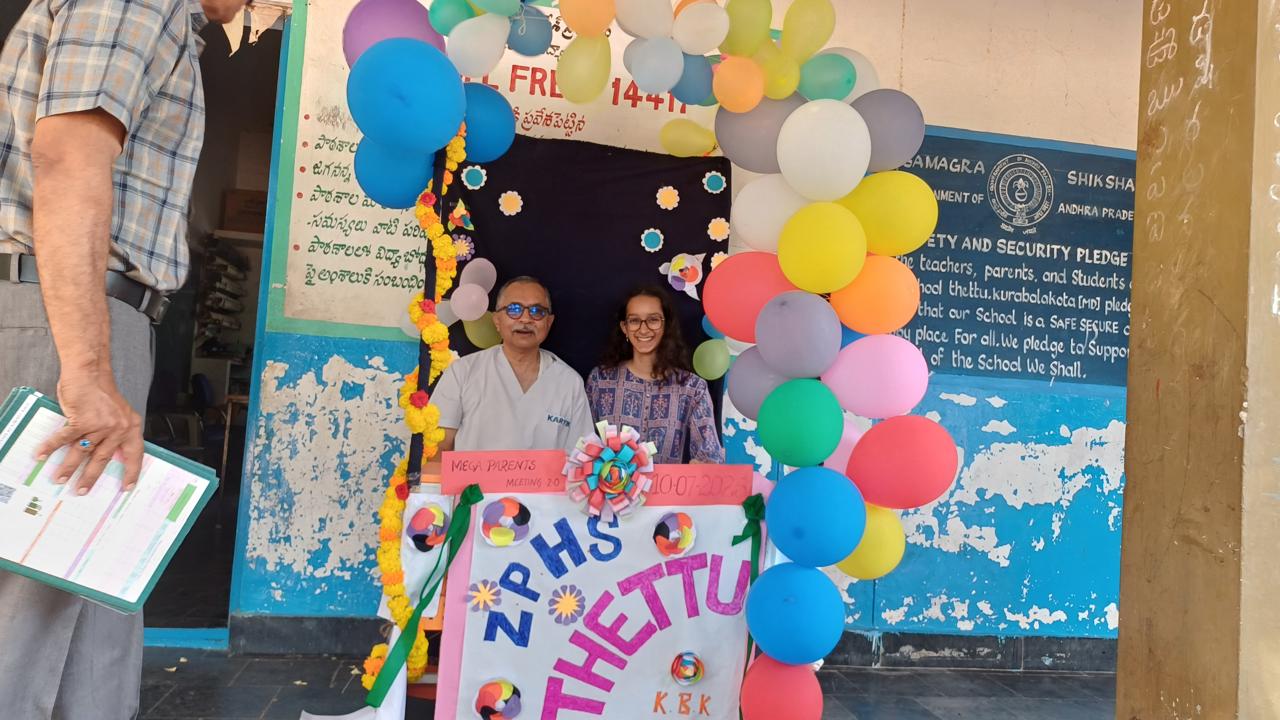
12th grade student at a residential school. My research and projects examine
historical narratives, grassroot development, and broader social issues.
Projects
Two long-form research projects
Digital Ethnography
Cow Urine Chronicles
An 18-month study of how cow-urine consumption is framed, defended, and historicised
across 83 YouTube videos — how a contested practice is rebuilt as tradition in the digital public
square.
Enter the archive
Field Study
The Nirasha of ASHAs
A field study of the invisible labour of India's frontline healthcare workers in
Annamayya district — their schedules, their pay, and what the community really thinks.
Read the study
About
I am a 12th grade student at a residential school with a deep interest in
history and the social sciences. My research and projects focus on the construct of historical
narratives, impact of developmental economics, and broader issues that affect communities.
How has history been invoked in the ways gomutra gets talked about on the
media, and how does the Indian public react to hearing what YouTube influencers claim history is?
A digital ethnography of an unusual corner of Indian YouTube
This archive documents an 18-month study under the mentorship of
Prof Joyojeet Pal along with a
team of international researchers of how cow urine consumption is framed, defended, and historicised
across 83 YouTube videos. It maps the recurring tropes, the appeals to antiquity, and the surprising
appearances of Western science — tracing how a contested practice is rebuilt as tradition in the
digital public square.
100 highly influential YouTube videos — classified manually and
analysed using LLMs to examine how history is invoked, recast, and selectively remembered in
the Gomutra discourse.
100
YouTube videos in corpus
83
Videos manually coded
28
Promoter videos
5–7
Explicit debunker videos
3.1M
Avg views per debunker video
680K
Avg views per promoter video
Methodology
The primary data source is YouTube. A video had to have at least 100 views to be included
in the dataset — ensuring relevance and real audience reach.
All transcripts were translated to English using LLMs. Each translation was manually
reviewed for accuracy — though some discrepancies may remain. Videos were then classified by
stance (promoter, debunker, neutral), content style, narrative style, and speaker
demographics.
A specific focus was placed on coding the historical imagination of each video: which time
periods are invoked, which are absent, and how antiquity is used as a substitute for
evidence.
Ethical Framing
All inferences and statements in this research are unbiased and based on observable
patterns in the data — not on personal opinions. This subject is culturally and religiously
sensitive, and that sensitivity has been central to how this research was conducted.
The goal is not to adjudicate whether Gomutra works or doesn't — the goal is to understand
what historical and rhetorical frameworks are being deployed, and what that tells us about
how Indians relate to their own past.
What the Data Shows
Preliminary Findings
Influencer content that invokes history and tradition is more likely
to find an accepting audience. History is a powerful tool — and in this corpus, it is deployed
with striking selectivity.
26 of 83
Videos cite ancient Ayurvedic texts by name — Charaka Samhita, Sushruta
Samhita, Ashtanga Hridaya, Bhavaprakasha Nighantu.
13 videos
Invoke "thousands of years ago" or "since ancient times" as a stand-in
for evidence.
13 videos
Mention rishis, sages, or ancestors as the source of authority.
0 videos
Mention the Mughal or British colonial period. The middle of Indian
history is entirely absent.
9 videos
Reference America or Europe — not as colonisers, but as validators.
"Even foreign science is now saying…"
Access the Data
The full dataset — 83 videos with transcripts, influencer metadata, classifications, and coded
variables — is available for review. This includes the master dataset and three thematic
breakdowns covering the Vedic frame, the role of the West, and the promoter-debunker divide.
Five patterns that surface repeatedly across 83 videos — from
ancient texts as the only valid authority, to the remarkable absence of 2,000 years of Indian
history.
01
Theme 01
Antiquity is the only "history" that matters
The historical imagination of this corpus is almost exclusively
pre-classical — a deep, undifferentiated "Vedic past" treated as an unbroken tradition. 26
of 83 videos cite ancient Ayurvedic texts by name. Another 12 invoke "thousands of years
ago" or "since ancient times." 13 mention rishis or sages. 13 cite the Vedas. Four
different ways of pointing at the same period.
Named ancient texts as authoritySage / Rishi authorityTime-distance / antiquity claimsCosmic / elevated terminologySacredness, divinity, and "Mother Cow"Institutional credentials borrowed for ancient claims
"And in the Vedas, it is given the status of Amrit, Amrit
means which does not let die, which is a life-saving drug."
— Rakesh Agarwal
Analysis
The sentence quietly slides from myth to pharmacology. Amrit is the drink of the gods but
by the end of the line it has become "a life-saving drug." Vedic theology, IIT
credentials, and modern medicine — none of them are made to check each other, which is
what makes the move work.
02
Theme 02
The West appears as a validator, not destroyer
When America or Europe appear (9 videos), they are not the colonisers
who erased traditional knowledge. They are recent ratifiers of it. "America granted a
patent on cow urine for cancer." "Germany and Singapore are importing our Ayurvedic beauty
products." Modernity isn't framed as a rupture — it's framed as eventual catch-up. This is
a quiet but important historiographical inversion: colonial trauma is replaced by Western
endorsement.
The patent as final proofBig international names as proofExport markets as quality judgesWestern media as a quality stampShame as argument — Western respect converted into Indian guilt
"These are the countries that understand the power of
India's centuries-old Ayurveda, but our people consider it a joke."
— Sushant Sinha
Analysis
The speaker shifts the argument away from whether cow urine works to whether Indians are
loyal. Doubting the substance gets framed as embarrassing your own country. The
contradiction doesn't slow him down because the line is built to make you feel guilty.
03
Theme 03
Debunkers refuse to engage on historical terrain
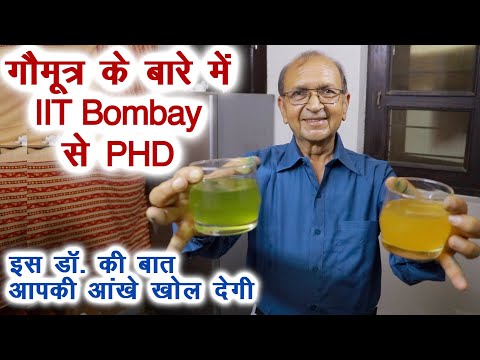
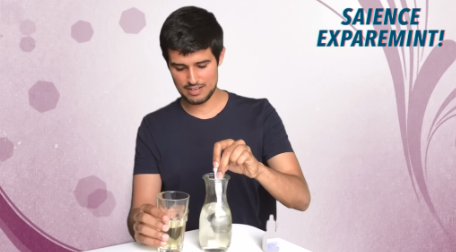
This is the most consequential pattern in the dataset. Dhruv Rathee's
strategy is to argue chemistry, not history — by performing the betadine trick with
ordinary water and his own urine, he sidesteps the entire ancient-text argument. The
skeptics treat history as irrelevant to whether chemistry works. The promoters treat
chemistry as confirmation of what history already established. Because the two sides
operate on different timescales, they almost never make contact.
Chemistry / experiment as rebuttalModern medical authority as the only valid framePolitics and current affairs as critiqueThe betadine experiment as shared battleground
"This is the first time that I will show you the experiment
of betadine in my own urine."
— Dhruv Rathee
Analysis
The move is deliberate. He is not attacking the ancient claim — he is bypassing it. By
replicating the same "miracle" with his own urine, he shows the trick is basic chemistry,
meaning the historical pedigree of cow urine isn't doing any of the work the promoters say
it is. He never names a text or a sage. He doesn't need to.
04
Theme 04
Claims come in bundles, not alone
If a video says cow urine helps your liver, it almost always also says
it helps your kidneys, your weight, your skin, and your digestion. Nobody promotes it for
just one thing. Liver is the most common claim (23 videos), and it tends to drag the rest
along with it. The promoted benefits cluster in a consistent hierarchy: mundane at the
base, chronic disease claims in the middle, then grand claims at the top (cancer cure — 25
videos).
The "Ramdev formula" — personal anecdote + joint/liver/weight
claimsClaim escalation ladder from mundane to miraculousCancer as the apex claimBundle credibility — low-stakes claims lending authority to
high-stakes ones
"Today's science proves what Baghbhatt ji said thousands of
years ago."
— Rajiv Dixit
Analysis
The hierarchy is what stands out. Science doesn't test the ancient claim — it confirms
it. The ancient sage is positioned as already correct and modernity just catches up. So the
speaker gets to claim scientific authority without ever being subject to scientific
review.
05
Theme 05
Two camps, two vocabularies
Promoters talk about Vedas, Ayurveda, immunity, and "amrit/sanjeevani"
— these words travel together. Skeptics talk about research, studies, experiments, and
chemistry — those words travel together. The two sides barely share language. This
linguistic divergence is not accidental. It reflects two entirely different epistemological
frameworks that happen to be fighting over the same object.
Promoter vocabulary: sacred, ancient, divine, amritDebunker vocabulary: experiment, research, chemistry, institutionWellness content as a third, neutral registerPolitical vocabulary as a fourth lane — mostly avoided by mainstream
content
The question is not whether Gomutra works — the question is
what we mean when we say it does.
Analysis
When promoters say "it works" they mean it works spiritually, ancestrally, and
chemically — all at once. When debunkers say "it doesn't work" they mean it fails a
randomised controlled trial. These are not the same conversation.
From the Corpus
Videos & Commentary
12 clips from the corpus — with close readings of what each reveals
about how history, science, and authority are constructed in the Gomutra discourse.
Cow Urine Magic! Hidden Secret in Gaumutra Explained
The move is deliberate. Rathee is not attacking the ancient
claim — he is bypassing it. By replicating the same "miracle" with his own urine, he
shows the trick is basic chemistry, meaning the historical pedigree of cow urine isn't
doing any of the work the promoters say it is.
"Nectar-like medicine… offering of all the gods and
goddesses." This isn't really a medical sentence at all. It's a religious one wearing
medical clothes. By the time he's called the substance an offering to deities, he's
left the realm of testable claims entirely.
Is There Really Gold in Cow Urine? Debunking the Myth
"This has been glorified for a reason, and there's politics
behind it too." Instead of arguing whether cow urine works, the speaker historicises the
promotion. His critique is structural — about who benefits from the claim — rather than
chemical or textual.
Surprising benefits of cow urine, America has made medicine
"A patent has already been obtained for using cow urine to
manufacture medicines for cancer…" The patent does all the work here. Just saying the
word "patent" makes the claim sound officially approved, even though nothing was ever
actually proved.
Many people have experienced this and America has granted it a
patent
Two unrelated things are stacked next to each other so that
they reinforce each other. Personal anecdotes and an American patent get treated as if
they're the same kind of evidence — but together they sound like a case.
These countries understand India's centuries-old Ayurveda
"These are the countries that understand the power of India's
centuries-old Ayurveda, but our people consider it a joke." The speaker shifts the
argument away from whether cow urine works to whether Indians are loyal.
The speaker stacks three impressive names — NIH, AYUSH, an
"International Journal" — into one breath. The volume of acronyms is meant to feel like
institutional consensus. Nothing about what those bodies actually concluded is
described, because the names alone are the argument.
ANSI Herbal Gaumutra — certified by the World Health
Organization
"The herbal cow urine by ANSI is certified by the World Health
Organization." The WHO is one of the most over-cited authorities on Indian YouTube —
partly because the audience won't go check. The certification claim is left vague, no
document shown, no date given.
"And in the Vedas, it is given the status of Amrit, Amrit
means which does not let die, which is a life-saving drug." Three different frames —
Vedic theology, IIT credentials, and modern medicine — none of them are made to check
each other.
Truth about Gomutra (Cow Urine) — Science or Myth?
The speaker spreads the claim across continents on purpose. If
the practice is only Indian, critics can call it Hindu pseudoscience. If it's universal,
attacking it is like attacking all of human history. The vagueness is what makes the
claim unfightable.
Cow urine benefits, precautions — complete information
"For thousands of years, cow urine has been used to prevent and
eradicate incurable diseases from their root." The longevity of a practice is
substituted for proof of its efficacy. Neither claim is defended in the sentence.
"Have the agenda-driven people specifically attacked the ancient
practices by dismissing what Ayurveda says?" "Agenda-driven" lets him skip past the
substance of any critique. "Attacked" changes intellectual disagreement into violence
against a community.
In the World
Talks & Publications
This study has formed a part of talks and a peer-reviewed paper
by my project mentor Prof Joyojeet Pal, University of Michigan, and his team of
co-researchers.
No mentions yet.
This research is ongoing. More presentations and publications are expected as the project
develops.
The Paper
The Role of History in the Acceptance of Gomutra
How YouTube's gomutra discourse is quietly rewriting Indian
history — one wellness video at a time.
Introduction
Introduction
Before getting into the analytics, it's worth discussing why cow urine of all things
merits a whole paper. Gomutra sits at this unusual intersection where almost every faultline
in contemporary India meets at once: Hindu religious practice (the cow is sacred),
traditional medicine (it shows up in Ayurvedic texts), a multi-crore wellness industry (Baba
Ramdev's company Patanjali alone sells huge volumes of
bottled cow urine under the brand Godhan Ark), and pseudoscience claims that have reached
cabinet ministers and prime-time news anchors. What makes it useful as a case study is that
the same yellow liquid gets framed as scripture, medicine, product, identity marker, and
political tool, sometimes in the same video. Few other Indian topics let you study religion,
science, commerce, and politics together in one corpus.
As you enter the gomutra sphere on YouTube, there is something that catches your attention
right off the bat. People are not just discussing the healing properties of cow urine, and
whether or not it can actually cure cancer; they are debating what kind of history India has
had, and whose historical authority should take precedence. A Patanjali
wellness video and a debunker video by Dhruv Rathee (one of India's most
followed YouTubers, known for political
commentary and myth-debunking content with audiences in the tens of millions) both seem to be
participating in the same discourse, yet their rhetoric and evidence couldn't be more
different.
The actual purpose of this paper is narrower than it might sound. I'm not trying to settle
whether cow urine works. I'm using gomutra as a small, somewhat manageable window into a much
bigger thing: how Indian public memory is being shaped on YouTube in real time. What I care
about is the historiography: which historical periods get amplified, which get
erased, and who gets to be the authority on "what India was like" and what that means for
Indians today. Cow urine is just a convenient case because that's one of the windows into a
much larger pattern.
Methodology
Methodology
I started with the 100 most-viewed gomutra-related videos on YouTube and ended up with 83
in the final dataset. The 17 that dropped out broke down roughly as follows: around 5 were
duplicates or re-uploads of the same content on different channels, 6 weren't really about
gomutra (it was mentioned in passing inside a longer wellness or religious video), 4 didn't
have usable transcripts (no auto-captions, or in languages I couldn't reliably translate), and
2 were too short to code anything meaningful. The remaining 83 YouTube videos about gomutra
mix promoter content (Patanjali ads, Ayurveda channels,
wellness influencers, nightly-news segments) and debunker content (Dhruv
Rathee, Dr. Ram Punyani, a couple of
medical doctors). I went for the most-viewed videos in each camp rather than a random sample
because the goal was to see what's actually shaping the conversation about gomutra.
For each video I got the auto-generated transcript, translated all of them into English
using LLMs, and then verified the result of the translations myself. I subsequently coded the
videos into categories like views, gender of channel, themes, content style, narrative style,
claimed benefits, named ancient texts, mentions of rishis or sages, references to the West,
political mentions, and any explicit historical periodisation.
Prior to starting my analysis, I read up on the basic methods of qualitative research
analysis. Going through 83 transcripts line by line for qualitative analysis would have taken
extremely long, so I used LLMs to pull out quotes, tag subthemes, and flag which historical
references came up where. I then went back and manually verified every single quote against
the original transcript myself, especially the ones I planned to actually use in the paper.
Anything that didn't match got dropped.
One limitation worth bringing to attention is that I only looked at gomutra. I can't say yet
whether the same historical pattern holds for yoga or general Ayurveda channels. That could
be the next step.
Main Findings
Main Findings
A lot of patterns came out of the coding (claim-bundling, the "Ramdev formula," debunkers
getting more views than promoters even though they're outnumbered 5:1, etc.).
One of the cleaner patterns in the data is that gomutra claims almost never travel alone. If
a video tells you cow urine is good for your liver, it'll usually also tell you it's good for
your kidneys, your weight, your skin, and your digestion in the same breath. Barely anyone
out there is pitching cow urine for just one thing. And the bundling isn't random, it
follows a reasonably predictable ladder.
At the base are the everyday, plausible-sounding claims: constipation and digestion (32 of
83 videos), skin and hair (21), obesity (16). The middle level is chronic disease — liver
(23), kidney (14), immunity (14), joint pain (11), diabetes (7). As we notice most of these
are chronic conditions for which there is no clear short-term cure, due to which is that
someone may end up using these unproven 'medicines' for several months to find no results.
And even then, they may be told that some or another aspect of how they used the medicine was
incorrect causing it not to have a desired effect.
At the very top sit the grand claims: cancer (25 videos) and the "there's literally gold in
cow urine" claim (only 2 creators say it, but debunkers love to attack it). The pattern is
that promoters almost always lead with the small believable claims before escalating
to the big ones. By the time a viewer has nodded along to "it helps with constipation,"
they're already several "yes"es deep when the cancer cure shows up. The structure is doing
rhetorical work that no single claim could do on its own.
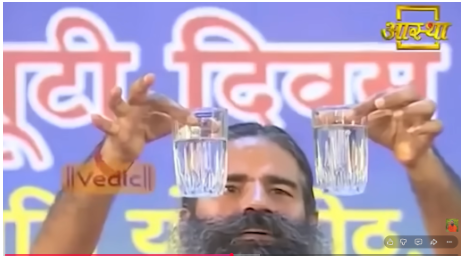
The single most revealing experiment in the whole dataset is that Baba Ramdev and Dhruv
Rathee, the loudest promoter and the loudest debunker in the dataset, built entire videos
around the exact same trick. Baba Ramdev's setup is short and visual. He pours a few drops of
betadine into a glass with water, adds cow urine, and within seconds the dark colour
disappears. He frames the colour change as proof that gomutra is neutralising toxins in real
time. Dhruv Rathee runs the identical experiment, except with his own urine instead of cow
urine, and gets the identical result. He doesn't need to argue with Baba Ramdev verbally, his
experiment does the talking. The "miracle" becomes just a magic trick the moment the same
trick works with his own urine.
Image 1: Dhruv Rathee's 'betadine experiment' using his own urine (link to YouTube video)Image 2: Baba Ramdev's 'betadine experiment' using gomutra (link
to YouTube video)
I'm mainly going to focus on the two findings that have a direct implication for how history
is being understood in India, because that's what I think is genuinely new here. Many gomutra
videos are doing historiography without realising it. They're collectively writing a version
of the Indian past where Vedic medicine flows uninterrupted to today's bottle of Godhan Ark,
the Mughals and British never existed, and the West shows up only as verification. And the
debunker side, by sticking strictly to chemistry, has let that historiography go
unchallenged.
3.1 The Past Refers Only to the Vedic Period
The single most striking pattern in the dataset is how much of Indian history is missing.
Out of 83 videos, more than half participate in a kind of ancient framing but it's always the
same, ancient. There are zero references to the medieval, Mughal or colonial period and only
one mention of cow slaughter being banned. The story jumps directly from rishis to today. The
lines between history and mythology are often blurred. This is meant to imply that Indian
history has been a black hole between the Vedic period and today, essentially suggesting that
Indian history got pushed back by whatever happened in between.
Here's how the "Vedic" gets invoked, broken into subthemes:
Table 1. How videos invoke the Vedic past (out of 83 videos)
Subtheme
Count
Example
Named ancient texts (Charaka, Sushruta, Ashtanga Hridaya, Bhavaprakasha)
26
"we have three great texts… Sushruta Samhita, Charaka Samhita, and Bhavaprakasha
Nighantu" — Rakesh Agarwal
"Thousands of years ago" / "since ancient times"
12
"For thousands of years, cow urine has been used…" — Dr Raj Satpute
Rishis / sages / ancestors
13
"Vagbhata Rishi has described the 'Mutravarg'…" — Dr Rupali Jain
Vedas referenced
13
"in the Vedas, it is given the status of Amrit" — Rakesh Agarwal
A reasonable pushback at this point is: if the Vedas actually do mention cow urine, how is invoking them a
misrepresentation? They do mention it. But two separate things are going wrong, and they’re worth keeping
apart. First, the medical part: the Vedas aren’t a scientific text, they’re religious literature, where
medicine wasn’t separated from ritual. Citing a Vedic verse as clinical proof would be an error. The Vedas
existing isn’t the misinformation, treating them as a peer-reviewed source is. Second, the historical part,
which this paper cares about more: even if you grant the medical claim, what these videos do with the
citations is a selective rewriting of Indian history. The 2,000-year intervening medical tradition gets
collapsed into a flat “ancient times,” when Charaka and Sushruta Samhita’s were written centuries after the
Vedas and routinely disagreed with earlier sources. There are two misrepresentations stacked on each other:
one about what the text says, one about what Indian history was.
What’s interesting isn’t just that these speakers reach for antiquity, but how they do it. The vocabulary
slides quietly between registers. Rakesh Agarwal, for example, says, “in the Vedas, it is given the status
of Amrit, Amrit means which does not let die, which is a life-saving drug.” The sentence quietly slides from
myth to pharmacology. Amrit is the drink of the gods but by the end of the line it has become “a life-saving
drug.” There are different frames stacked in the video: Vedic theology, his IIT credentials, and modern
medicine. None of them are made to check each other, which is what makes the move work. The same thing
happens with sacred terminology more broadly: words like Vishaghna (“killer of all poisons”), Rasayana,
Sanjeevani, Shivambhu show up scattered across promoter videos, and each one quietly lifts cow urine out of
the medical register and into a metaphysical one. You can’t run a clinical trial on an offering to the gods.
Time-distance claims do something a bit different. When Dr. Raj Satpute says “For thousands of years, cow
urine has been used to prevent and eradicate incurable diseases from their root.” The hidden inference is,
if it didn’t work, would people have used it for so long? “Incurable diseases” plus “from their root” also
packs in two enormous claims: that cow urine handles what modern medicine can’t, and that it doesn’t just
treat but eradicates. But, neither claim is defended in the sentence. Akshay Chopra does a related move when
he says “a lot of yogis have shown the true use of urine therapy in our ancient Indian texts,” and then adds
Chinese, African, and American traditions on top. The speaker spreads the claim across continents on
purpose. If the practice is only Indian, critics can call it Hindu pseudoscience. If it’s universal,
attacking it is like attacking all of human history. He doesn’t name a single non-Indian text, the vagueness
is what makes the claim unfightable.
The implication is bigger than gomutra. If this is how a popular health debate is being historicised,
where, from vedic times it directly cuts to the present, then a whole chunk of Indian history is being
quietly edited out of public memory. The conventional script (Mughal destruction, British suppression,
modern reclamation) doesn’t even need to be invoked here. The Vedic past, standing alone, is doing all the
work.
The reason the Vedic-to-today jump actually matters is that this jump quietly decides what counts as
“Indian” knowledge. If your only reference point for Indian medical tradition is the Vedas-and-now, then
everything in between basically stops being part of “our tradition.” The medicine that came with the
Mughals, Indo-Islamic medicine, colonial-era Indian doctors trained in Western medicine, post-Independence
medical institutions, all of it becomes someone else’s history that happened to take place on Indian soil.
The Vedic-to-today move isn’t just lazy storytelling, there is very specific political intent in it. It’s
like a sorting mechanism: this is ours, that wasn’t. By extension, everything that happened between the
Vedas and now is erased, and therefore, something to be ignored. And the political stakes of that sorting
are obvious; it lines up with a much bigger conversation in Indian public life about who counts as
authentically Indian. The Vedic past, standing alone, is doing all the work.
3.2 The West Shows Up as a Validator, Not a Destroyer
This finding cut against the paper's expectations. In most Indian discourse around cow
protection and Hindutva politics, the West is cast as the destroyer of Indian local knowledge.
Here, it isn't — it's the endorser.
Table 2: How the West is invoked
Subtheme
Example
What's doing the work
American patent as proof
"America has granted it a patent." — Baba Ramdev, Sudhir Chaudhary
The word "patent," with no detail on scope
Big-name institutions
"NIH… AYUSH… International Journal…" — Lotus Pregnancy Care
Stacking acronyms
WHO certification
"Certified by the World Health Organization." — B.K. Sahu
The brand of WHO
Export markets as judges
"Singapore, Germany, America, Britain, UAE are buying." — Sushant Sinha
Foreign markets = validation
Western media as quality stamp
"Washington Post, New York Times, Guardian have praised…" — Sudhir Chaudhary
Newspaper names as authority
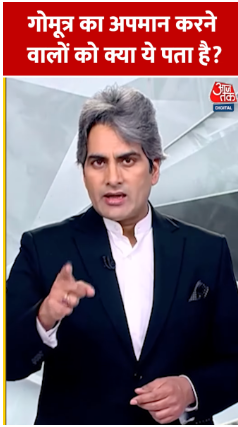
Image 4: Sudhir Chaudhary's video, "Do those who insult gomutra know this?" (link to YouTube video)
It’s worth being precise about what I am and am not claiming here. I’m not saying the West has to show up
as a coloniser, or that validation from the West is inherently bad. People can cite whoever they want. What
I’m flagging is two narrower things. First, the rhetorical function, phrases like “America has granted a
patent” are being used to end the conversation rather than open one. None of the speakers describe what the
patent actually covers, whether any medicine was approved, or what its legal scope is. There are 4 widely
cited patents where cow urine, specifically gomutra or its distillate, is the core active ingredient or
focus of the invention that have been granted by US courts. They are as follows: US Patent No. 6,410,059
(2002), US Patent No. 6,896,907 (2005), US Patent No. 7,235,262 (2007), and US Patent No. 7,297,659 (2007).
The patents are presented as proof of medical efficacy whereas the patents are actually simply a legal test
of novelty. The brand of “America” does all the work. That’s worth flagging regardless of whether you think
the West is a hero or a villain in the story.
Second, the historiographical observation is that in most other Indian discourse (cow protection politics,
Hindutva commentary, anti-secularist talk), the West is the destroyer of Indian local knowledge. Here,
suddenly, it isn’t and that inversion is the finding, not a complaint.
Sushant Sinha’s quote is doing the most interesting work: “These are the countries that understand the
power of India’s centuries-old Ayurveda, but our people consider it a joke.” Two things happen in that
sentence. First, Western respect is treated as proof of value. Second, the argument is quietly shifted away
from whether cow urine actually works to whether Indians are loyal enough to their own tradition. He’s also
leaning on Western validation in the same line where he’s criticising Indians for caring about Western
opinion, but the contradiction doesn’t hurt him because the line is built to make you feel guilty, not to
make you think.
The Sudhir Chaudhary and Baba Ramdev patent claims work the same way. None of them actually describe what
the patent covers, whether any medicine got approved, or what the legal scope is. Just saying “patent”
carries weight.
Implications
4. Implications
4.1 What Does This Mean for Young People Who Grow Up Watching This?
The most striking structural feature of the gomutra content I analysed is not what it says,
but what it leaves out. No videos in this dataset mention the British and none mention the
Mughals. There is no story of loss, suppression, or reclamation — it is just a seamless jump
from ancient rishis straight to today's bottle of Godhan Ark, with roughly 2,000 years of
Indian history simply not spoken about. For a young person watching hours of this content, the
picture of the past that gets formed is one where India had extraordinary medical knowledge in
the Vedic period, this knowledge has existed uninterrupted ever since, and the only people who
doubt it are those with an "agenda." Sushant Sinha, on a channel with 625,000 views, puts it
plainly: "have the agenda-driven people specifically attacked the ancient practices by
dismissing what Ayurveda says?" The word "agenda-driven" does the magic here — it
bluntly discredits any critic, turning scepticism itself into evidence of bad faith.
The effect of this framing, when absorbed repeatedly, is a warped understanding of both history and
science. Because the Mughal and British periods are simply absent from this discourse, young viewers are not
learning that those periods produced their own contributions to medicine, scholarship, and science — that
Mughal-era physicians translated and brought together Greek, Persian, and Indian medical traditions, or that
the colonial period, for all its downsides, introduced scientific methodologies that modern medicine now
relies on. Instead, the story they receive is that the Vedic period was when real knowledge existed, and the
only science worth trusting is the science that confirms what the rishis already knew. Rajiv Dixit hints to
this in a video with 78,000 views: “Today’s science proves what Baghbhatt ji said thousands of years ago.”
Science here is not a method for testing ideas, it’s just a way of getting official-sounding approval for
beliefs that were already decided long ago. Consequently, this suggests therefore that whatever came in with
the Mughals and British – Islam, Westernization of certain kinds – were all things that were bad for India.
This matters because it does not just affect how young people understand gomutra, it shapes the entire
category of what counts as “legitimate knowledge.” If Vedic science is always already correct, and modern
beliefs are only now catching up, then there is no independent role for evidence and experiments only
confirm the claim instead of testing it.
4.2 Implications for Understanding Medicine
One of the most disorienting features of this content is the genuine confusion it creates around authority.
Rakesh Agarwal, introduced as an “IIT Bombay PhD”, tells viewers that Amrit means “a life-saving drug”, a
switch from Vedic terminology into pharmacology that happens so quickly most viewers would not notice the
shift. R.S. Chauhan, described as “the former Director of the IVRI”, is cited by Sushant Sinha as endorsing
cow urine as “a truly remarkable substance.” These are not anonymous internet commentators, they are people
with credible titles and their credentials are being used not to test ancient claims, but to vouch for them.
On the debunking side, Dr. Navin Agrawal says simply that “the chances of benefiting from this in the eyes
of modern medicine are not acknowledged” — staying firmly in the present, citing institutional authority. It
is also, according to my data, far less effective. His video has 8,400 views against Rakesh Agarwal’s 2.4
million.
The deeper problem is that people’s understanding of medicine is being shaped by their understanding of
history. If you have already accepted that Vedic science is the foundation of all true knowledge, then a
chemistry experiment performed by a YouTube creator using his own urine is not going to change your mind.
The promoters have already answered the question on historical grounds and the debunkers are still trying to
answer it at the level of chemistry. So, we see, they are not in the same conversation. This raises a
difficult question: who do people learn to trust when they are sick? A doctor trained in modern medicine who
dismisses traditional practice, or an influencer backed by ancient texts, IIT credentials, and an American
patent? In my data, the influencers are winning; not because the claims are stronger, but because the
historical frame that supports them has been left completely unchallenged.
4.3 Ayurveda in Indian Science Textbooks
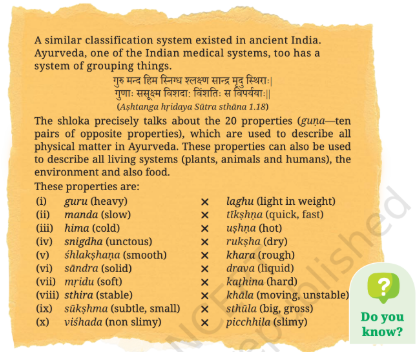
What happens on YouTube might seem like a self-contained problem but it is not. Under India’s National
Education Policy (NEP) 2020, the current government has introduced Ayurveda into NCERT science textbooks for
Classes 6 to 8. The Class 6 Curiosity textbook now references the Ashtanga Hridaya Sutra
Sthana, the very
same ancient text that Dr. Rupali Jain cites on YouTube, with 726,000 views, to authorise the medical
properties of cow urine. The same texts that lives on wellness channels now lives in the national
curriculum.
Image 5: The NCERT Class 6 Curiosity textbook, chapter "Materials Around
Us" (link to PDF)
The Class 8 textbook includes a chapter titled “Ayurveda: Balance of Body, Mind, and Environment,” covering
daily routines and seasonal habits drawn from traditional practice. The University Grants Commission (UGC)
is simultaneously developing course modules to bring Ayurvedic principles into higher education. This is a
systematic, institutional movement.
The connection back to this study’s findings is not incidental. The gomutra videos in our dataset operate
by treating ancient texts as given authority — “the Charaka Samhita says so” is used as a
conversation-ender, not to invite inquiry. When that same logic enters the science classroom through
state-approved textbooks, it is no longer just one influencer among people, it becomes the curriculum. The
movement from imagination of history to imagination of science to imagination of medicine is no longer just
a pattern in online content.
The long-run implication is serious. If what counts as scientific knowledge is shaped by what confirms
India’s ancient greatness, and if that idea becomes standard in classrooms and eventually in medical
training, then the medical establishment itself (who gets trained, what gets funded, what treatments get
recommended) will increasingly reflect a vision of science defined by history rather than by evidence.
Conclusion
5. Conclusion
This paper set out to answer a specific question: if the medical properties of gomutra are
largely unproven, why do so many people believe in them? The answer this study finds is that
belief is not being carried by chemistry. It is being carried by history, or more precisely,
by a very selective version of history.
Across all the promotional videos, the pattern is consistent: the ancient Vedic and Ayurvedic
past is invoked relentlessly (26 videos cite named Sanskrit texts, 13 cite the Vedas, 13
mention rishis and sages), while everything that happened between that golden past and the
present is simply absent. The West shows up not as a villain but as a validator, American
patents, Washington Post articles, NIH name-drops, ratifying what "history" already
established. And the debunkers, for all their reach (Dhruv Rathee's betadine video alone
accumulated 8.1 million views), never actually engage with this historical frame. They argue
about chemistry, the promoters argue on cultural grounds, and so the two sides never meet.
This study offers insight into how misinformation spreads in India. It's not through outright
political dialogue — videos that name Prime Minister Modi or the BJP actually get fewer views.
It works through cultural memory and of ancient authority, it works through what people hear
that makes them feel good about themselves in a sense. Viewers feel like they're learning
about their heritage, not being persuaded, but the ideas and messages they're taking in are one
where scepticism is "agenda-driven" and modern science only counts when it agrees with what the
rishis already knew.
Once that framework makes it into NCERT textbooks (which it already has, with Ayurveda
entering the Class 6 and 8 science curriculum under NEP 2020) it's no longer just a YouTube
problem. The same historical imagination that makes gomutra believable online will shape what
a generation of Indian children understands as science, and eventually, as medicine.
What the gomutra case ultimately reveals is something larger than cow urine: it is a working model of how a
society’s relationship with its past can be reshaped to serve its relationship with contested science. It
happens one YouTube video at a time, in the same vocabulary of rishis and ancient texts and foreign
endorsements, until it is simply the way things are.
The Field Study
The Nirasha of ASHAs
The Invisible Labour of India's Frontline Healthcare Workers
A qualitative field study based on interviews with three ASHA
workers and fifteen community members in Annamayya district, Andhra Pradesh.
Abstract
ASHA stands for Accredited Social Health Activist, but it also means "hope" in Hindi. Since
the introduction of the programme in 2005 under the National Rural Health Mission (NRHM),
over nine lakh ladies have been recruited in India's rural areas, and there is limited
documentation of their day-to-day working conditions. This report is based on qualitative
studies conducted with three ASHA workers, fifteen community members, and observations from
field rounds in a group of villages in Annamayya district, Andhra Pradesh. The findings
reveal that the official narrative of ASHAs as "part-time volunteers" is highly inappropriate
since their work is comparable to that of full-time workers on multiple fronts, including
maternal health, disease surveillance, digital reporting, and social welfare. These ASHA
workers are very modestly remunerated; they bear the cost of transportation, equipment, and
communication personally, and despite that, receive their dues irregularly. Further, this
paper brings forth the interrelated dynamic between poor pay, community perception and
disproportionate workload. The paper requests for a permanent classification of ASHA
workers, a simplified incentive system and meaningful representation of these ladies in
health policy decisions.
Introduction
Introduction
Community health in rural India is, as a matter of fact, held up by people who live right
next to the problem — women in villages, local midwives, and volunteers who know everyone in
their area. They know which house has a pregnant woman, which child has still not been
vaccinated, and which elderly man keeps forgetting his blood pressure medicine. In a country
where many villages still do not have access to medical clinics and hospitals, these
grassroots workers are the crucial first interface between these marginalised communities and
the public healthcare system. They translate what doctors say into the local language, carry
medicines over long distances, and build a kind of trust that the government itself has
struggled to build.
The ASHA (an acronym for Accredited Social Health Activist) programme was started in 2005
under the National Rural Health Mission (NRHM) and rolled out from 2006. The intention is to
have one trained female health worker for every one thousand people in a community or
village. ASHAs, wearing white sarees with a blue border, are recruited from the village itself
by women's groups, the Gram Sabha, and block officers, and they're generally supposed to be
women between the ages 25 and 45 who have studied till class 10 at least. Literacy
requirements may be relaxed if no suitable candidates are available. They work alongside the
Anganwadi system that was established in 1975 under the Integrated Child Development Services
Scheme and runs village centres for nutrition, pre-school education, and basic health
check-ups for children less than 6 years in age, pregnant women, and new mothers. Thus, most
of the rural maternal and child health in India is taken care of by the Anganwadi and ASHA
systems. Today, there are over nine lakh ASHA workers across the country, making it one of
the biggest community health worker programmes in the world.
The issue is, even though everyone talks about how important ASHA workers are, almost no one really looks
at what their actual day-to-day routines are like. A lot of what is written about them is just quantitative
data like the number of child deliveries they helped with, the number of vaccines administered, etc. There
isn’t much discussion on the conditions they are working in, the challenges they face or how they think they
can be more effective. Engaging with the ASHA workers in Annamayya district in Andhra Pradesh made it
apparent that the way the government describes their role does not adequately reflect what they actually do
and the real cost at which they do it. Honorariums fixed with little regard to performance, overtime work
not being compensated, travel and conveyance costs having to be incurred personally, and absorbing patients’
stress as a normal part of the job, are all factors that are rarely mentioned in official reviews of this
group of medical workers
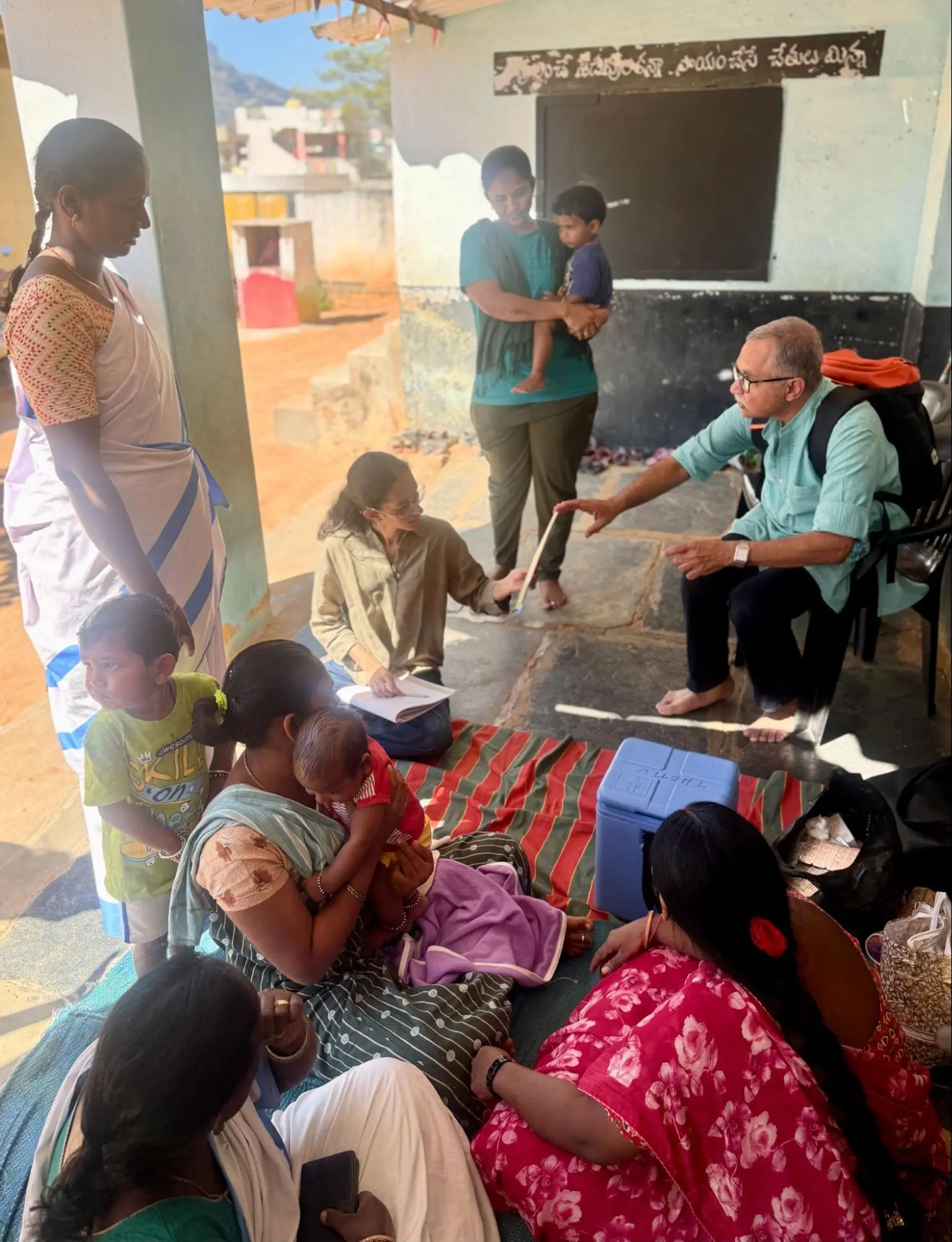
Image 1: Field visit shadowing ASHA worker
One specific rural area was therefore chosen as a sample for case study and the work done essentially
focussed on exploring the ground realities of being an ASHA worker and developing a perspective on how they
are perceived by the people they take care of. It is based on a cross section of interviews and field
observations carried out in villages near the Rishi Valley Rural Health Centre, Kurabalakota Primary
Healthcare Centre (PHC), and Madanapalle in Annamayya district of Andhra Pradesh. I spoke to ASHA workers,
Anganwadi teachers, and patients from a mix of Hindu and Muslim households across different ages.
Statistically, it is not a large survey since the focus is more on exploring ground realities: what is
working, what better can be done, and where the trust isn’t really reaching.
The rest of the report is structured as follows: a literature review of what has already been said about
ASHA
workers, followed by field observations and interview findings concluding with a discussion of what is
missing
in existing reportage.
Literature Review
Literature Review
This section reviews what has already been written about ASHA workers. It is organised into
three themes: what studies say about their roles and how effective they are; their specific
role in maternal, child, and nutrition-related health, and the problems and challenges they
face. The section concludes with a brief discussion on what is missing from the existing
research, which is the gap this report is trying to fill.
Most of the literature describes ASHAs as the "first port of call" for rural health needs,
especially for women and children. Saxena, Kakkar, and Semwal (2012) looked at 150 ASHAs in
Haridwar district and found that the majority saw antenatal care, vaccinations, and family
planning as their main work, and a lot of them also saw the job as a way into future
employment. The National Health Mission's own writing describes ASHAs both as service
providers (they carry a basic drug kit that contains Oral Rehydration Salts, Iron & Folic
Acid tablets, condoms, delivery kits and some basic Over The Counter medications) and as
activists who spread awareness about health and push the community to actually use the health
services that exist. What I saw in the field matches this almost completely: ASHAs in
Annamayya district carry medicine and vaccine boxes between villages, pick up vaccines weekly
from the PHC, run Non Communicable Disease (NCD) surveys door-to-door, and go with pregnant
women to the PHC or district hospital. But what doesn't show up in the official description is
how long their actual day is (usually a full 9am to 5pm day with no holidays) and how many
additional duties they handle, like dengue checks, Tuberculosis (TB) follow-ups and
registering participants for India's digital healthcare ecosystem, Ayushman Bharat Health
Account (ABHA).
A lot of studies also look at how ASHAs affect maternal and child health specifically. Padda et al (2013)
compared urban and rural Faridkot in Punjab and found that maternal and child health services in rural areas
clearly improved after ASHA workers were introduced, with rural indicators sometimes doing better than urban
ones. ASHAs are the ones making sure babies are exclusively breastfed for the first six months, that
vaccinations are done at the stipulated 45 day, 75 day, 105 day, and 10 month intervals, and that high-risk
pregnancies actually make it to the right hospital. They also work with the Anganwadi system, helping with
monthly immunisation, handing out ‘Balamrut’ powder (an Ayurvedic immunity booster) and eggs for children
between 3 and 5 years of age, and distributing iron syrup and deworming tablets in schools.
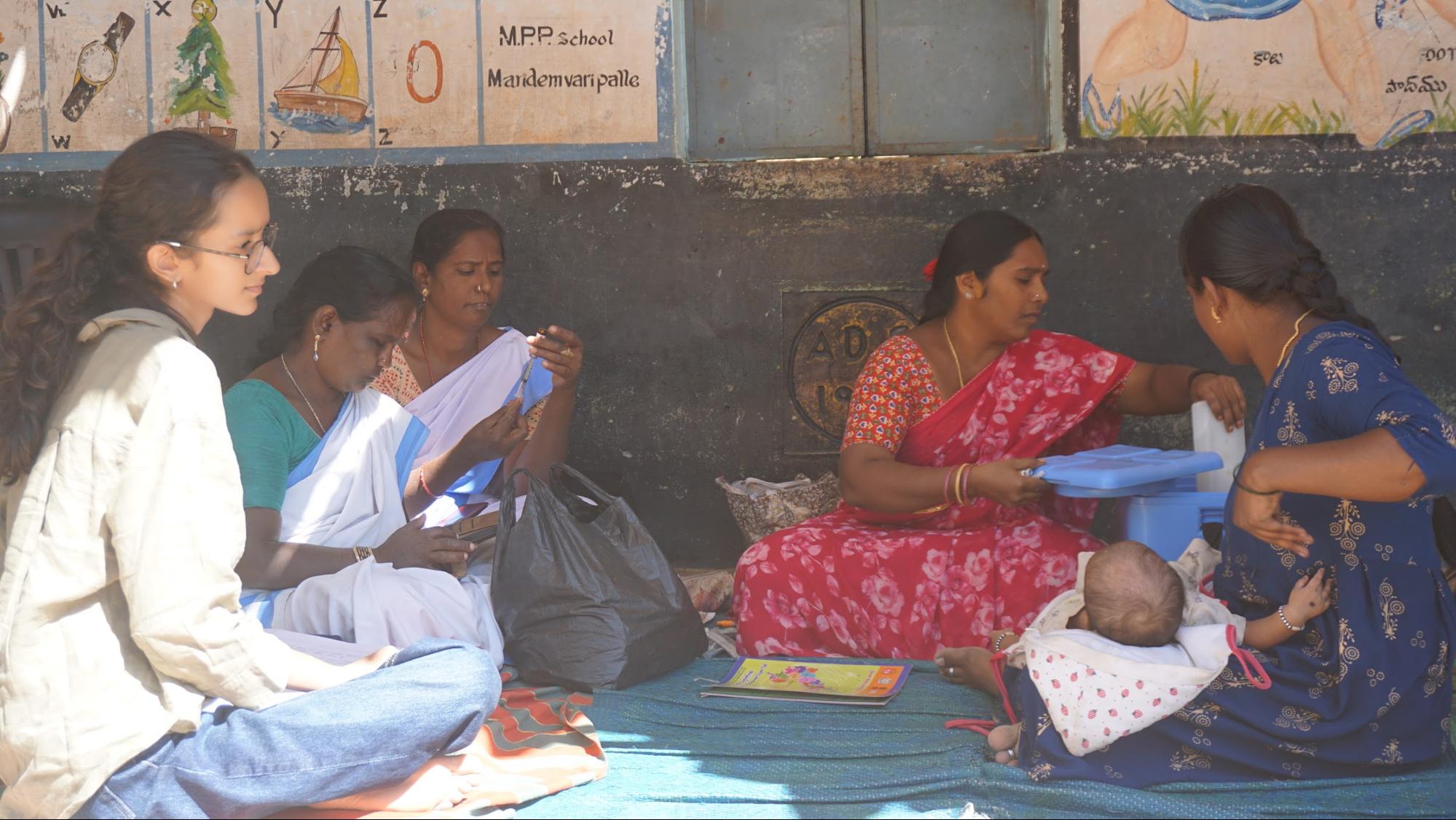
Image 2: Saturday immunisation at the Anganwadi school
The interviews backed this up too. Patients in villages around Madanapalle said ASHAs were most helpful with
anaemia, vaccinations, and calling the Emergency Response Service on 108 for ambulances. One ASHA worker had
just spent three days, travelling 45 kilometres each way on each day to Punganur, to arrange for a tubectomy
for a lady from her village. What was especially striking in this instance was that she had to personally
bear the full cost of all this travel.
The literature is also consistent on the challenges. Gopalan, Mohanty and Das (2012) did a mixed-methods
study of 386 ASHAs in Orissa and found that what demotivates ASHAs most is bad health infrastructure, too
much workload, and how the incentives are structured, while what keeps them going is mostly internal, like a
sense of social responsibility and self-efficacy. Across studies, ASHAs come across as overworked,
under-resourced, and financially insecure. They don’t get a fixed salary, just a small honorarium and
performance-based incentives, so what they actually earn varies from month to month. And all of this sits on
top of gender. Every ASHA is a lady, and a lot of them are widowed or separated or from Below-Poverty-Line
homes doing community health work over and above all the housework. Saxena et al (2012) also pointed out
that even basic things like the age and education criteria are not always followed during selection, so even
the small protections built into the programme do not always apply.
What the existing research doesn’t really evaluate is the actual economics of being an ASHA. How the ₹10,000
a month honorarium in areas like the ones investigated in this study actually plays out when each worker has
to pay for transport costs, their mobile device and its data charges, and all the paperwork. Or what it is
like when three ASHAs are doing the work of five because there aren’t enough workers. Or how women deal with
the fact that the job is not permanent, there is no pension, and that many need to take microloans to manage
cash flows. There is also not much research on how ASHA workers’ perception differs across communities and
categories. Some families think they are extremely important, but others, especially in semi-urban Muslim or
higher-income households, said they barely see them and just go to private clinics instead. The fieldwork
and interviews in this report attempt to address these gaps by focusing on what the workers themselves say
about their conditions and what the community actually thinks, in a part of Andhra Pradesh that has not
really been written about much.
Table 2: ASHA Compensation Structure, Annamayya District (2025)
This report uses a qualitative approach, which essentially means that the findings are
developed from conversations and direct observation rather than from surveys or statistical
data. This method was chosen because the answers sought (a day in the life of an ASHA worker,
her community's perception and treatment of her, and what it feels like to do this job in the
context of the money earned) are not the sort that a questionnaire can answer well.
Individuals' relationships with the healthcare system are layered and personal. Every attempt
was made to get the participants to describe these views in their own words. Statistics can
tell you that an ASHA worker vaccinated sixty per cent of the women in her community, but they
can't tell you why she walked two kilometres in the scorching heat to make that happen.
The fieldwork for this study was done in a cluster of small villages in a semi-arid rural
region. Agriculture, mainly groundnut, paddy, tomatoes, and millets, is the principal economic
activity in this region and it is essentially reliant on monsoon rains as only a small amount
of the land is irrigated. Public health infrastructure is poor: the closest complete hospital
is a long bus ride away and the roads often become unusable during the monsoon months.
Two villages were visited. One lay close to an all weather road and the other was at a
distance away from it. This criteria was chosen because the ability to commute and the access
to transport meaningfully changes a community's experience with the healthcare system and it
was therefore relevant to hear both perspectives.
Two groups of people were interviewed. The first was the ASHA workers for the area, Chamundeshwari, Ammajan
and Hemlata. These three ladies covered the chosen area collectively so all of them were interviewed. The
second group comprised fifteen members from the local community recruited from people visiting the Rural
Health Centre and from an immunisation drive under way during the field visit. A conscious effort was made
to assemble a diverse group rather than the most convenient group available. The final sample included Hindu
and Muslim families, women and men, young mothers and older women, Telugu-only and Telugu-Urdu speakers, and
residents from both the more central as well as the more outlying parts of the villages. The aim was to hear
voices from as broad a range as possible.
Three methods were used to collect data.
The first was interviews. All interviews were personally conducted in Telugu, the local language.
Respondents were not given time limits, they could speak for as long or as little as they liked depending on
their comfort and convenience. Consequently, some conversations ended in twenty minutes while some others
went on for forty five minutes. Participants were asked about their routines, income, household
circumstances, experiences with the healthcare system and how things had changed over time. Conversations
did not follow a set question-answer format, the flow was a bit informal, like they were talking to a family
friend.
The second method was observation. Over the course of a field visit with the ASHA workers, homes and
families on the call sheet were visited, prenatal checks and evaluations were attended and documentation
completed was considered. Insights were gained from discussions that the ASHA workers engaged in with the
people being met. This method added perspective to the information gained from the interviews. The patience
and perseverance required to communicate effectively with patients given the modest levels of literacy and
awareness; the physical resilience required for all the walking, every day, and the application of judgement
and experience in situations that were not standard.
The third method was the study of relevant documents. Some very useful sources of information were
government websites like the National Health Mission pages about the ASHA programme; various research papers
and news articles about ASHA workers in different states, and brochures available at the rural sub-centre.
These documents all provided context and awareness.
Analysis followed. Repeated scrutiny of interview notes and observations recorded in the field resulted in
the discovery of insightful comments, helpful feedback and recurring patterns. These patterns were then
grouped into four broad themes: what ASHA workers actually do day to day, the pay and financial conditions
of the role, the community’s perceptions of them, and the structural problems built into the wider system.
These themes structure the findings section that follows.
Table 1: Weekly and Monthly Schedule of ASHA Workers
Day / Frequency
Activity
Monday – Tuesday
Village rounds: antenatal follow-ups, household surveys, NCD screenings
Wednesday
Thettu subcentre — immunisation session + village rounds
Thursday
School and Anganwadi visits: iron tablets (6+yrs), Vitamin A, height/weight,
deworming
Friday
Dry Day survey: larva/dengue checks, sanitation inspections, drain monitoring
Saturday
Anganwadi immunisation (rotating across four villages each month); iron syrup for
ages 3–5
Sunday
Emergency standby; early finish if no urgent cases
3rd Friday
All pregnant women are escorted to Kurabalakota PHC
Twice monthly
All pregnant women to Madanapalle District Hospital; Village Health Nutrition Day;
Village Health Sanitation Day
1st Tuesday
Compulsory ASHA meeting, Kurabalakota PHC
Monthly
Gram Sabha meeting
Findings
Findings
What ASHA workers really do
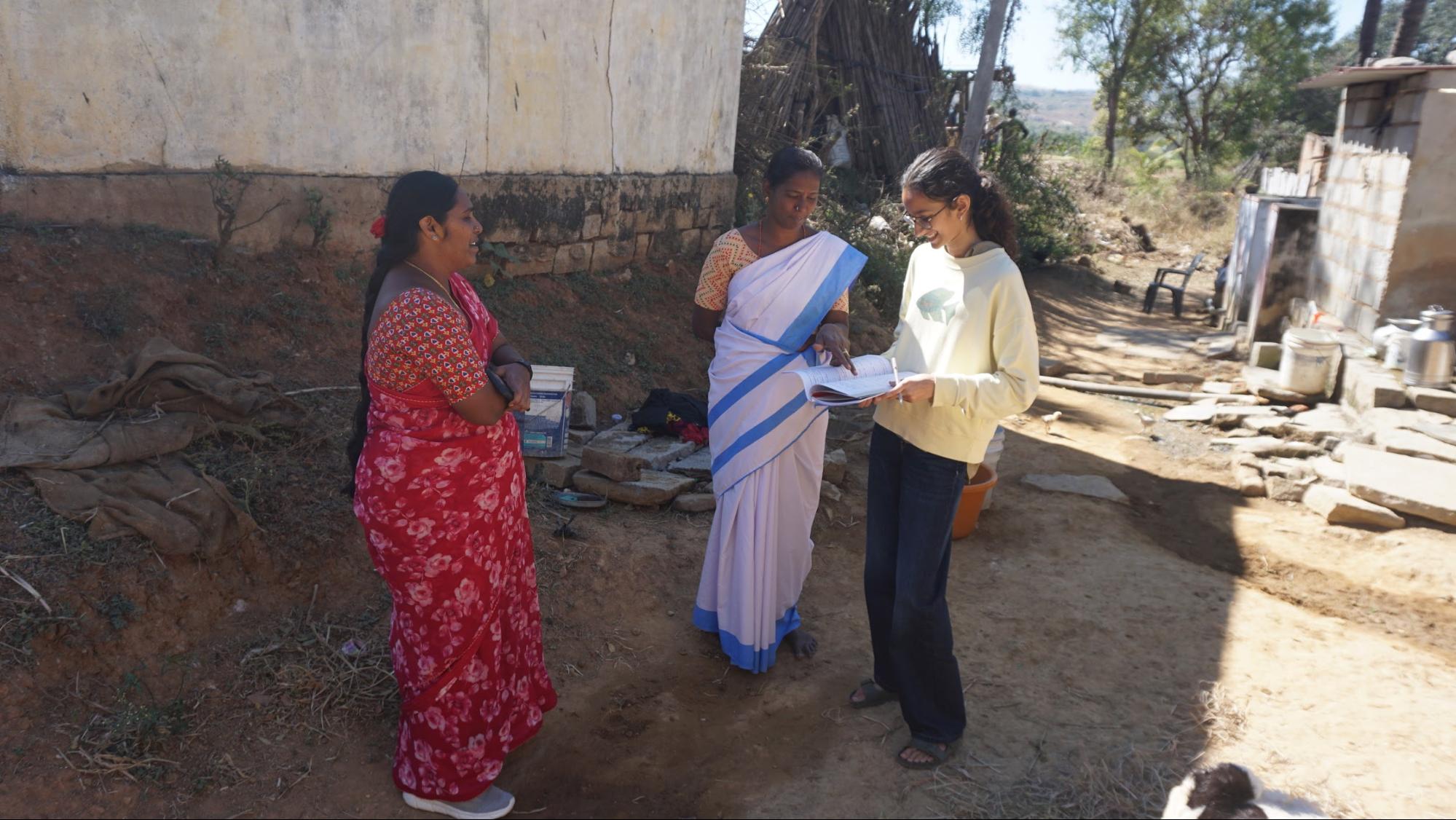
Image 3: An ASHA worker, in the white saree, detailing the nature of her work
A typical working day for the ladies spoken to begins around nine in the morning and does not have a clear
end. Officially, ASHA workers are classified as part-time volunteers and are only required to work for a few
hours, but in practice, they are on duty from 9am to 5pm and, in case of emergencies, are on call around the
clock. Chamundeshwari described being reachable at any hour – when a lady in her area goes into labour at
two in the morning, she is the person who gets the phone call. Hemlata reiterated this. Weekends too are
rarely free, especially during immunisation drives or surveys.
The range of work that each of them is expected to handle is striking. Based on interview learnings and
field visit observations, responsibilities include prenatal check-ups and follow-ups, escorting pregnant
women to hospital when labour begins, post-delivery home visits, newborn weighing and the administration of
the full schedule of childhood vaccinations, TB screening and follow-up with patients on long courses of
treatment, household-level dengue and malaria surveys (that involve walking from door to door checking for
stagnant water), distributing iron tablets, family planning counselling, contact tracing during outbreaks,
and a substantial amount of register-keeping. Ammajan also mentioned tasks that fall outside any official
remit, such as helping families apply for disability certificates and personally following up on patients
who have stopped taking their TB medication.
Each ASHA worker is responsible for about a thousand people, and sometimes more. When asked whether this
caseload was too high, all three ladies laughed. Hemlata pointed out that the official one-ASHA-per-thousand
guideline does not account for the fact that the villages are physically spread out, so reaching a single
household can take half an hour on foot; many times, if there is no one else in the village willing to take
up the job of being an ASHA worker, they have to cover larger populations. As she put it, the number on
paper does not capture what the job actually demands.
Pay and money problems
Pay was the single issue that came up in every interview, with all three ASHA workers and with most of the
community members too. ASHA workers do not receive a fixed salary. Their income consists of a small monthly
honorarium of roughly ₹10,000 (the exact figure varies by state) together with an incentive. The incentive
structure looks reasonable on paper, but payment is often delayed by months or never given. Chamundeshwari
told me she was still waiting on incentives from work she had done five months earlier and others,
regardless of the effort they put in, never received incentives at all.
In addition to the compensation being meagre, ASHA workers absorb a significant amount of out-of-pocket
expenses. They use their personal phones for work, making calls to patients, sending photos of registers,
navigating government apps, and they pay for their own mobile data. During the first months of the COVID-19
pandemic, they bought their own Personal Protective Equipment (PPE). They buy their own registers, pens, and
at times even bus tickets when they have to travel to the block office to submit reports.
Their personal financial situations makes these costs much harder to bear. Chamundeshwari’s husband has been
unwell for years and cannot work consistently, which means her ASHA income is essentially what keeps the
household running. Ammajan, whose husband has passed away, is the sole earner for children still in school,
and she described having to choose between paying her phone bill and paying their school fees. Hemlata’s
situation was a little easier because her husband works, but she was still firm that the income did not
match the hours she put in. None of the three women has any form of pension, leave entitlement, or job
security to fall back on.
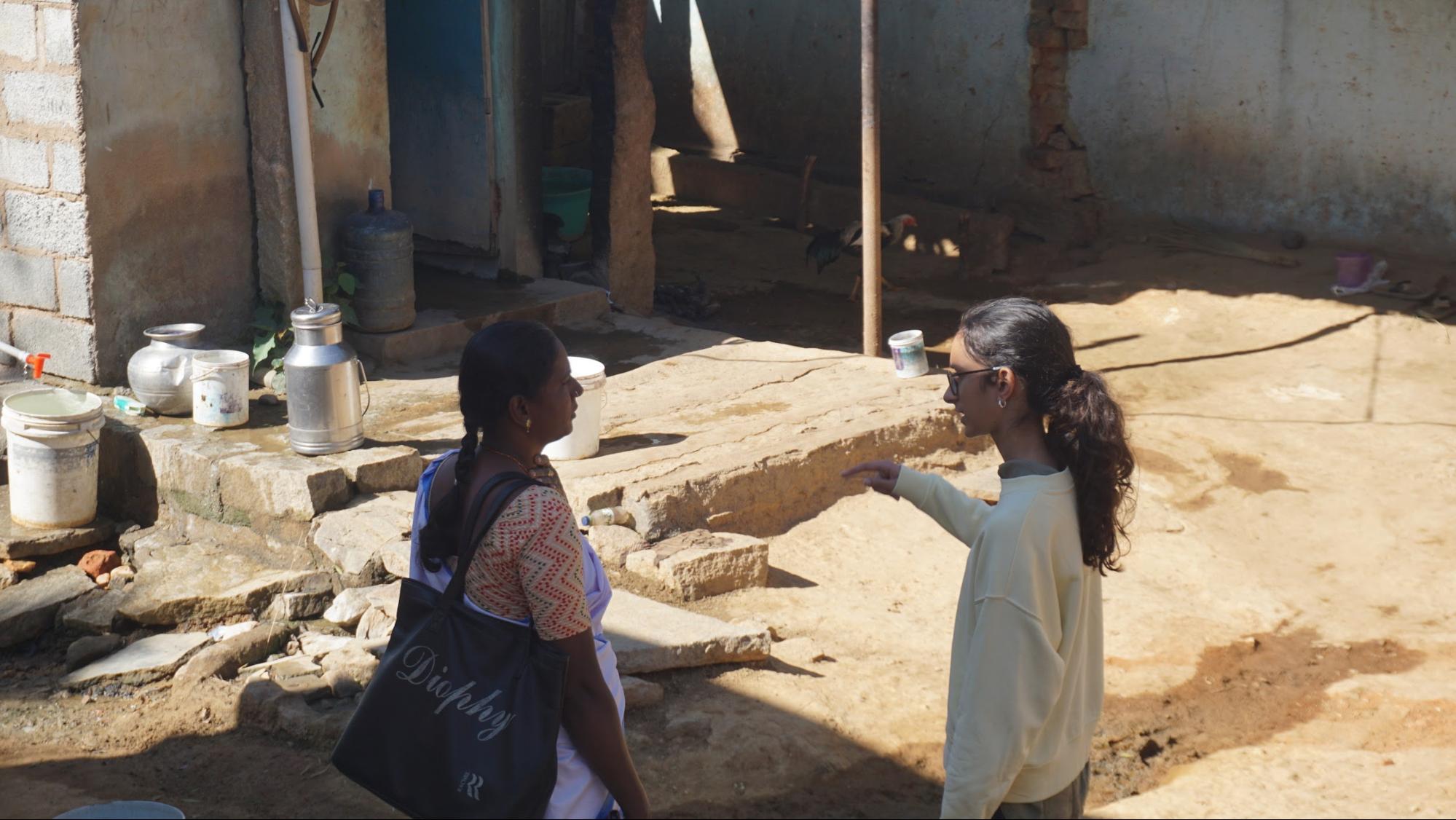
Image 4: An ASHA worker describing her living conditions outside her house
What the community thinks
The community’s views were more divided than expected. Some respondents spoke about their ASHA worker in
genuinely warm terms. One young mother credited the ASHA worker with saving her baby’s life: she had had a
complicated pregnancy, and the ASHA worker had visited her again and again, pushing her to attend her scans
and accompanying her to hospital when labour began. An older woman said the ASHA worker was the only person
in any official capacity who had ever come to her door simply to ask whether she was alright.
Other respondents had little or no contact with their ASHA worker at all, and a few did not know who their
ASHA was. When probed further, the explanation usually came down to one of two things. Either the household
lived in one of the more outlying hamlets that were difficult to reach regularly, or there was a quiet
social distance, usually along religious or caste lines, that no one quite stated openly, but was clearly
present.
A subset of respondents preferred to go to private hospitals or clinics, despite the cost. Their reasoning
was partly about trust – they felt the government sub-centre was understaffed and rushed – and partly about
status. One man indicated that government services were “for the poor” and that he did not want to be
perceived in that way.
COVID-19 came up in nearly every community interview. Several respondents felt that ASHA workers deserved
greater recognition and compensation for their work during that period, and expressed frustration that their
conditions had not improved since. Respondents reported dissatisfaction with compensation relative to
workload.
Problems in the system
There is more to the story than what we see every day. The principal issue with ASHA workers is that they
are not permanent employees. The government states their employment status as “voluntary”. This means ASHA
workers do not get a salary that they can count on. They do not get time off when they need it or a pension
when they are old. ASHA workers don’t have any of the things that come with a real government job. Many ASHA
workers have been in the role for two decades and still not classified as permanent. A few of the women
spoken to had been doing this work for over twelve years and still had no job security, no pension, and no
real path forward. They are still waiting for something that will give them security. Given the critical
role they play, the issue of ASHA workers is a problem that needs to be solved.
This becomes especially visible when ASHA workers are compared with Auxiliary Nurse Midwives (ANMs), who do
overlapping work in the same villages. ANMs are formally employed by the government, with a fixed monthly
salary, leave entitlements, and a pension. In practice, the ASHA worker often does the legwork (visiting
houses, identifying patients, bringing them in) while the ANM handles the clinical portion. The ASHA worker
is then paid a fraction of what the ANM earns. All three ASHA workers raised this comparison without
prompting, and it was clear that the disparity stung.
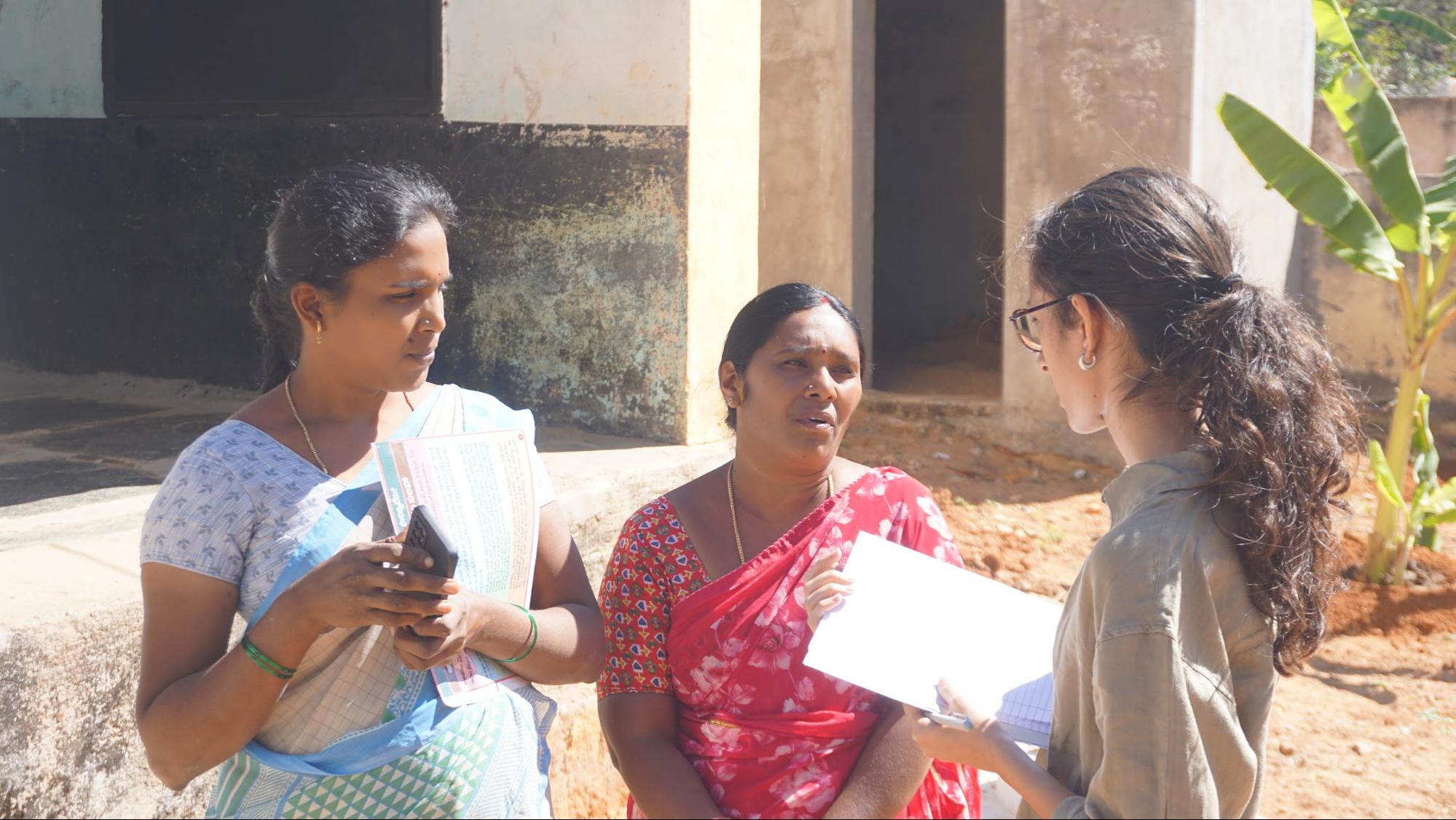
Image 5: an ANM comparing her job details and compensation with that of ASHAs
A specific case made the unfairness particularly clear. A woman in one of the villages had undergone a
tubectomy and developed complications afterwards. The ASHA worker had been the one to counsel her, bring her
in for the procedure, and follow up at home for weeks. The incentive for the whole episode was small. When
complications arose however, it was the ASHA worker the family blamed, not the doctor and not the ANM. She
absorbed the social cost without receiving either the professional standing or the pay that would have come
with it.
The final structural issue is the move to digital reporting. The government has been steadily shifting
registers, reports, and surveys onto smartphone applications. None of the three ASHA workers I spoke to had
been given a phone by the government, and none had received meaningful training on the apps. They were
navigating the software on their personal handsets, often with help from their children, while still being
held to the same deadlines as before. Chamundeshwari said she had been pulled up for late submissions even
though her phone was old and the application kept crashing. The system, in short, is asking these women to
function as digital workers without giving them the tools or the instructions to do so.
Discussion
Discussion
The three themes that came up across the interviews – workload, pay, and community perception – don’t really
stand on their own. They are interrelated and point to deeper issues in the system. The ASHAs spoken to were
doing substantially more than what their original job description covered: maternal health visits, COVID
follow-ups, NCD screening, TB tracking, election duty, distributing iron tablets to young girls, and even
helping fill out Ayushman Bharat and Aadhaar-linked beneficiary lists. But the incentive structure hasn’t
expanded with the workload. So they end up doing more work for the same unpredictable pay, which then
affects how their families and neighbours view the job. A few women mentioned that their husbands or in-laws
kept asking why they were “running around” so much for so little money, and this constant questioning seemed
to tire them more than the physical work itself. The community perception piece isn’t separate from the pay
piece either. When people in the village see that the government doesn’t pay you a proper salary, they don’t
take the role as seriously, and that makes it harder to do the actual work of convincing women to get safe
deliveries in the hospital or vaccinate their children. So pay shapes perception, perception shapes how much
cooperation an ASHA gets, and that in turn shapes how heavy her workload feels. It’s a loop, not three
separate problems.
Image 6: Parent-Teacher Meeting event on a Thursday at Zila Parishad High School where ASHA
workers were checking height and weight and distributing iron and deworming tablets
The issue with the system is underlying to all of this. The ASHA programme was designed in 2005 as a
“voluntary” scheme to bridge the gap between communities and the public health system, but two decades later
the same framing is being used to justify keeping wages low even though the role has completely transformed.
The experiences documented in this field site raise concerns that these ASHA workers are doing what would,
in any other country, be considered the work of a community health nurse, but they’re being paid like
part-time volunteers and managed like government employees, expected to attend meetings, fill forms, meet
targets, and answer to multiple supervisors (ANM, PHC medical officer, block coordinator). This in-between
status is what creates most of the day-to-day friction.
These findings mostly line up with what researchers have documented in other states. Ved et al (2019) and
Saprii et al (2015) both pointed out the mismatch between the scope of ASHA work and the volunteer framing,
and that came through clearly in interviews conducted for this research. The delays in compensation
mentioned (some women said they hadn’t received incentives for almost five months) match the patterns Bajpai
and Dholakia (2011) have written about, and also what came up during the ASHA strikes in Maharashtra,
Karnataka, and Haryana between 2020 and 2023. Scott’s (2018) global review of community health workers
brought up similar issues: unclear job descriptions, weak supervisory support, and the gendered devaluation
of “care work”. This suggests this isn’t just an Indian problem.
However, the findings of this research differ a little in the sphere of community perception. A lot of the
literature, especially from Kerala and Tamil Nadu, talks about ASHAs being respected in their community, but
in the villages visited for this research, the impression was a lot less consistent. Some women were
admired, but others described feeling judged or looked down upon within their communities. This tracks more
with studies from Bihar and UP and therefore suggests that the “ASHA experience” is really shaped by
state-level investment, training quality, and local caste/gender dynamics. The Kerala model works in Kerala
partly because the basic public health system is stronger due to their education system, higher gender
equity, and less rigid social structures.
It is readily acknowledged that the sample for this research was small and so the findings cannot be
substantially generalized. The dynamics could be really different in another district and there would
definitely be differences in another state. The ladies interviewed were also the ones willing to talk. For
example, it was not possible to talk to ASHAs who had quit so their perspectives are missing from this data,
and their reasons might also be the most important ones to state. Lastly, as a school-student researcher, an
‘outsider’ not fluent in the local language, and someone from a different class background than most of the
ladies interviewed, the responses received could possibly have been impacted for their depth and candour. A
longer fieldwork period would likely have provided a better picture. Thus, what is put together here is
really a starting point rather than a final piece.
Policy Recommendations
Policy Recommendations
Permanent employment. The most fundamental shift the government could make is to
stop calling ASHAs "volunteers" and recognize them as permanent health workers with a fixed
monthly salary. Right now, their pay is split between the centre and state and is
unpredictable, which means in some months, an ASHA might earn ₹5,000 while doing the
same amount of effort as someone earning ₹10,000 in a different state. Several
state-level commissions and the 45th and 46th Indian Labour Conferences have already
recommended that ASHAs be classified as regular workers, but nothing has actually moved at
the central level. A guaranteed minimum monthly salary, even ₹15,000, with incentives
layered on top, would give these ladies some financial stability and also signal that their
work is taken seriously by the state.
Incentives. Even if permanent employment takes time, the incentive structure itself
needs fixing. Currently there are over 60 different incentive heads, each with its own
paperwork and verification process, which is part of why payments get delayed for months.
Consolidating these into approximately 8–10 broader categories tied to outcomes
(maternal health, child health, NCDs, etc.) would reduce the administrative work for both
ASHAs and the PHC staff who process payments. Linking payments to a direct digital transfer
system with a public dashboard where ASHAs can see what they're owed would also reduce
dependence on supervisors who sometimes hold up payments. The ladies interviewed were upset
about the amount and equally about the unpredictability and the running around required to
actually receive their dues, if at all they do.
Social security. ASHAs currently fall through almost every social security net in the country.
They don’t get EPF, ESIC, gratuity, or a pension, even though many of them have been doing this work for
over a decade and treat it as their primary occupation. Extending these benefits would acknowledge the
long-term nature of the role. At the very least, health insurance for the ASHA and her immediate family can
be provided along with maternity benefits (which is almost ironic given that they are the ones promoting
institutional deliveries), and a retirement amount that pays out after 10+ years of service. Some states,
like Kerala, have piloted small pension schemes for ASHAs, and the results have been encouraging in terms of
retention. This would give these ladies something to fall back on when they retire
Workplace safety. Safety came up again and again in the interviews and is almost completely
missing from current policy. The ASHAs spoken to described doing night visits during deliveries, walking
alone through fields and unlit roads, dealing with aggressive male relatives during household surveys, and,
during COVID, being sent into infected homes without proper PPE. A basic safety protocol needs to be put in
place: a transport allowance or arrangement, especially in rural and tribal areas, and PPE supply during
emergencies.
Representation in decision-making. The last thing to push for is giving ASHAs an actual seat at
the table when health policy gets made. Right now, they’re treated as the people who implement decisions
made by people who have never done a household visit. Mandating ASHA representation (with voting rights, not
just attendance) would change this. They have ground-level knowledge that no bureaucrat or consultant has,
and using that knowledge would probably make health programmes work better, not just be fairer to the ladies
doing the work.
Conclusion
Conclusion
This study found that ASHAs in the villages visited are carrying a workload that has
expanded far beyond their original role, while their pay remains unpredictable and their
position in the community is more uncertain than the official narrative suggests. The three
themes of workload, pay, and community perception are deeply tied together, and they all
point to a system that depends on ladies' labour without giving them the recognition,
security, or voice that the work deserves.
What this implies is that surface-level fixes like a small incentive raise here, a one-time
bonus there, are not going to solve anything. Findings from this case study suggest:
permanent employment, a fixed incentive structure, real social security and safety
provisions, and actual decision-making power for ASHAs themselves. Future research could
push this much further. A larger, multi-state sample would help show how much of what is
found in this work is specific to this region versus a national pattern. A longitudinal
study following the same ASHAs over a few years would capture how burnout and changing
policy actually play out in their lives. And a comparative study across states with very
different ASHA outcomes (say Kerala vs. Bihar) could help figure out which policy choices
actually make a difference.
The Hindu Bureau. (2026, February 23). ASHA workers stage protest demanding fixed
₹18,000 salary and fulfilment of promises. The Hindu. thehindu.com/…/article70667231.ece
World Health Organization: WHO. (2021, December 3). ASHA — the driving force
behind India's public health services. who.int/…/asha-the-driving-force…
Prakash, P. (2022, May 28). Explained | All about India's ASHA workers, recipients of
WHO's Global Leaders Award. The Hindu. thehindu.com/…/article65457663.ece
Dudala, S. R., Ponna, S. N., Upadrasta, V. P., Bathina, H., Sadasivuni, R., Geddam, J. J.
B., & Kapu, A. K. R. (2021). Assessment of gaps of knowledge and practices of frontline
community workers in Chandragiri Mandal, Chittoor district, Andhra Pradesh: maternal and
child health services. International Journal of Community Medicine and Public
Health, 8(3), 1299. doi.org/10.18203/2394-6040.ijcmph20210817
Swarna, S. (2026). Knowledge of Accredited Social Health Activists on SDGs, Maternal
Health, Child Health, Reproductive Health in selected District of Andhra Pradesh.
Galore International Journal of Applied Sciences and Humanities, 88. doi.org/10.52403/gijash.20260113
Biyyala, R., Moola, R. S. R., & Arepalli, S. (2019). Evaluating the performance of
ASHA workers in rural and tribal areas in Kurnool division of Kurnool district, Andhra
Pradesh. International Journal of Community Medicine and Public Health, 6(8),
3418. doi.org/10.18203/2394-6040.ijcmph20193464
Abdel-All, M., Abimbola, S., Praveen, D., & Joshi, R. (2019). What do Accredited
Social Health Activists need to provide comprehensive care that incorporates
non-communicable diseases? Findings from a qualitative study in Andhra Pradesh, India.
Human Resources for Health, 17(1), 73. doi.org/10.1186/s12960-019-0418-9
Sreerama, G., Matavalum, S., Chandresekharan, P., & Thunga, V. (2015). Difficulties
in accessing and availing of public health care systems among rural population in
Chittoor District, Andhra Pradesh. International Journal of Medicine and Public
Health, 5(4), 265. doi.org/10.4103/2230-8598.165085
Saxena, V., Kakkar, R., & Semwal, V. (2012). A study on ASHA — a change agent
of the society. Indian Journal of Community Health, 24(1), 15–18. cabdirect.org/…/20123357967
Padda, P., Devgun, S., Gupta, V., Chaudhari, S., & Singh, G. (2013, December 31).
Role of ASHA in improvement of maternal health status in northern India: an urban rural
comparison. iapsmupuk.org/…/article/view/357
Gopalan, S. S., Mohanty, S., & Das, A. (2012). Assessing community health workers'
performance motivation: a mixed-methods approach on India's Accredited Social Health
Activists (ASHA) programme. BMJ Open, 2(5), e001557. doi.org/10.1136/bmjopen-2012-001557
Scott, K., George, A. S., & Ved, R. R. (2019b). Taking stock of 10 years of published
research on the ASHA programme: examining India's national community health worker
programme from a health systems perspective. Health Research Policy and Systems,
17(1). doi.org/10.1186/s12961-019-0427-0
Scott, K., & Shanker, S. (2010). Tying their hands? Institutional obstacles to the
success of the ASHA community health worker programme in rural north India. AIDS Care,
22(sup2), 1606–1612. doi.org/10.1080/09540121.2010.507751
Dholakia, R. H., & Bajpai, N. (2011). Improving the performance of accredited social
health activists in India. Columbia Academic Commons (Columbia University). doi.org/10.7916/d8988g63
Scott, K., Beckham, S. W., Gross, M., Pariyo, G., Rao, K. D., Cometto, G., & Perry,
H. B. (2018). What do we know about community-based health worker programs? A systematic
review of existing reviews on community health workers. Human Resources for Health,
16(1), 39. doi.org/10.1186/s12960-018-0304-x
Child Rights and You. (2026, March 31). What is Anganwadi System in India? Objectives
& Necessity. CRY — Give Children a Happy, Healthy and Creative Childhood. cry.org/blog/anganwadi-system-in-india/
Malhotra, R. K. M. D. (2025). Unrecognised pillars of public health: The struggles of
ASHA workers in India. Vascular and Endovascular Review. doi.org/10.64149/j.ver.8.15s.116-126
Sundararaman, T., Ved, R., Gupta, G., & Samatha, M. (2012). Determinants of
functionality and effectiveness of community health workers: results from evaluation of
ASHA program in eight Indian states. BMC Proceedings, 6(S5). doi.org/10.1186/1753-6561-6-s5-o30
Ved, R., Scott, K., Gupta, G., Ummer, O., Singh, S., Srivastava, A., & George, A. S.
(2019). How are gender inequalities facing India's one million ASHAs being addressed?
Policy origins and adaptations for the world's largest all-female community health worker
programme. Human Resources for Health, 17(1), 3. doi.org/10.1186/s12960-018-0338-0
Renuka, B., Sreedevi, A., & Paul, C. N. (2014). Impact of Educational Intervention on
Knowledge of Asha Workers about Their Job Responsibilities in Rural and Tribal Areas of
Kurnool Division in Kurnool District, Andhra Pradesh. International Journal of
Scientific and Research Publications, 4(11). ijsrp.org/research-paper-1114/ijsrp-p3526.pdf
Government of Andhra Pradesh, Women Development & Child Welfare Department. (n.d.).
Evaluation of Accredited Social Health Activist (ASHA) in Andhra Pradesh. wdcw.ap.gov.in/Schemes/Saksham